01
The challenge
The imagined brief was to make a premium olive oil feel contemporary and giftable without losing the grounded credibility of a food product. The pack needed to work in specialist retail, direct-to-consumer photography and restaurant or hospitality gifting.
A second challenge was balance: too much rustic language could make the brand familiar but undifferentiated, while excessive luxury styling could distance the product from taste, origin and everyday use.
02
Strategic direction
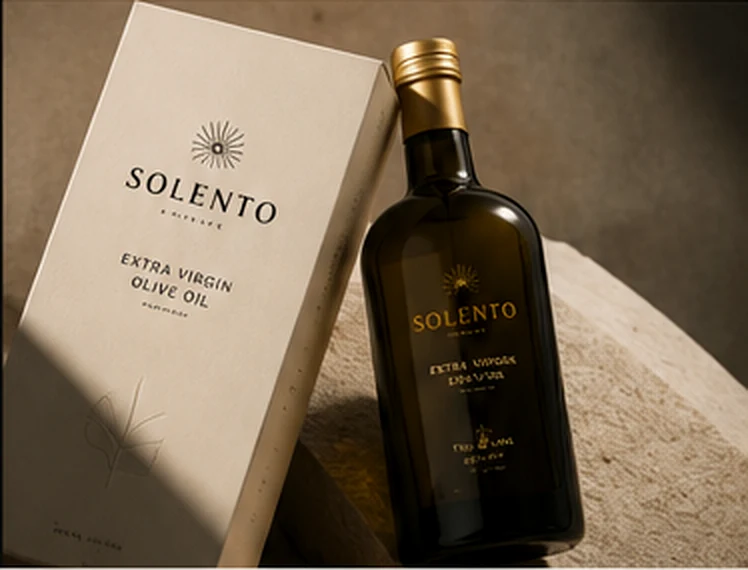
Solento is built around quiet confidence. The dark bottle protects the product and creates a strong silhouette; the warm carton introduces tactility and gift value. A restrained sun symbol gives the identity a memorable sign linked to climate and cultivation without illustrating an obvious landscape.
Typography and spacing carry much of the premium signal. Instead of filling the front with claims, the design establishes a clear reading order and leaves room for approved origin, variety, harvest and certification information in a real project.
03
Identity and packaging system
The bottle and carton behave as one family while serving different roles. The bottle is the recognizable product object; the carton provides storytelling, protection and a larger information surface. Gold-toned detail is used selectively so finishing can support hierarchy rather than become decoration everywhere.
Future oils, sizes or gift editions could be differentiated through measured colour and material changes while the core symbol, typography and label proportions remain stable.
04
Application and production reality
The visualization explores light on dark glass, label texture, cap material and the relationship between bottle and secondary packaging. It also creates a useful image library before physical photography: single product, gift set, detail and group views.
In a live food project, the final information architecture would use client-approved mandatory food information, origin statements, nutrition where applicable, language versions, claims and barcodes. Printer proofs and real material samples would determine the final foil, paper and colour outcome.
05
What the concept demonstrates
The concept shows how a food product can feel premium through discipline, provenance and material direction rather than visual excess. No commercial launch or performance result is claimed.
FAQ
Frequently asked questions
Is Solento a real olive oil brand?
No. It is a self-initiated concept used to demonstrate strategic packaging and visualization.
Could the design work without a carton?
Yes. The bottle can function independently, while a carton can be reserved for gifting, export or selected retail contexts.
How would variants be distinguished?
A live range could use controlled colour, paper or secondary-symbol changes tied to variety, origin or harvest while retaining the core structure.